
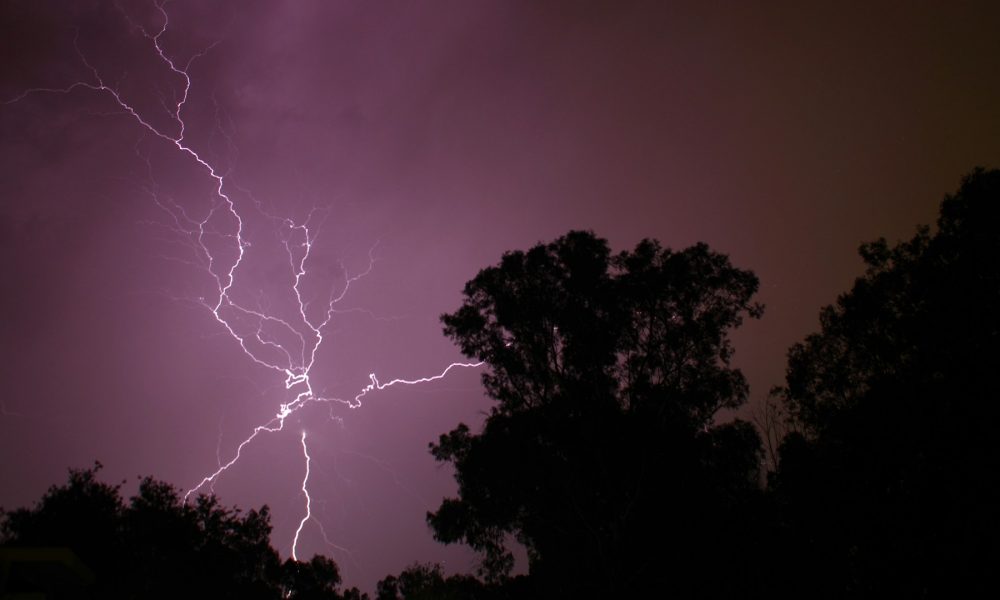
How Lightning Strikes Claim 320 Million Trees Annually
Lightning is striking down more than just power lines. Every year, it kills about 320 million trees worldwide, and that number is climbing. A recent study led by Andreas Krause from the Technical University of Munich lays it all out. Lightning is a much bigger player in forest damage and climate change than anyone thought.
However, this damage isn’t just about fallen trees. When trees get zapped and die, they start to rot, releasing huge amounts of carbon dioxide. The decay from lightning-struck trees lets out up to 1.09 billion tons of CO₂ each year.
That is not far off from what wildfires burn through when they torch living forests. And this carbon doesn’t just vanish. It goes right into the air we breathe.
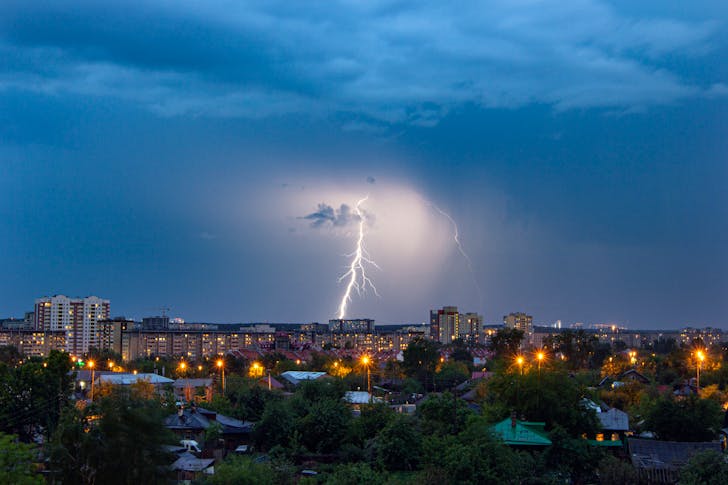
Travel / Pexels / Lightning usually hits the tallest trees in the forest, the study says. It doesn’t always leave marks, but it kills them slowly from the inside.
That is part of why this problem stayed under the radar for so long. We are used to thinking about fire, logging, and pests. But lightning? It is quiet, sneaky, and just as deadly.
The worst-hit areas are tropical forests like the Amazon and the Congo Basin. These regions see constant storms and have giant trees, perfect targets for lightning. When those trees die, whole layers of the forest can fall apart. Plants and animals that depend on them lose their homes.
Climate Change Is Supercharging Lightning
The bad news is that climate change is making lightning more common. For every degree Celsius the planet warms, lightning strikes go up by 10 to 12 percent. Warmer air holds more moisture, and that moisture fuels storms. More storms mean more bolts.
This is especially bad news for places like Canada, Russia, and the northern U.S., where forests haven’t had to deal with frequent lightning in the past. As these places heat up, they are getting slammed with more strikes. That means more dead trees, more carbon released, and more pressure on already stressed ecosystems.
The Carbon Problem No One Saw Coming
When trees die from lightning and start to break down, they don’t just quietly vanish. They give off carbon, and lots of it. The study shows that lightning-struck trees emit nearly as much CO₂ as wildfires. That is a massive, unexpected source of greenhouse gas.
This matters because trees are one of our best tools for pulling carbon out of the air. But if millions of them are dying each year from lightning, and then releasing carbon instead of storing it, the whole system starts to break down. What used to be a carbon sink becomes a carbon source.
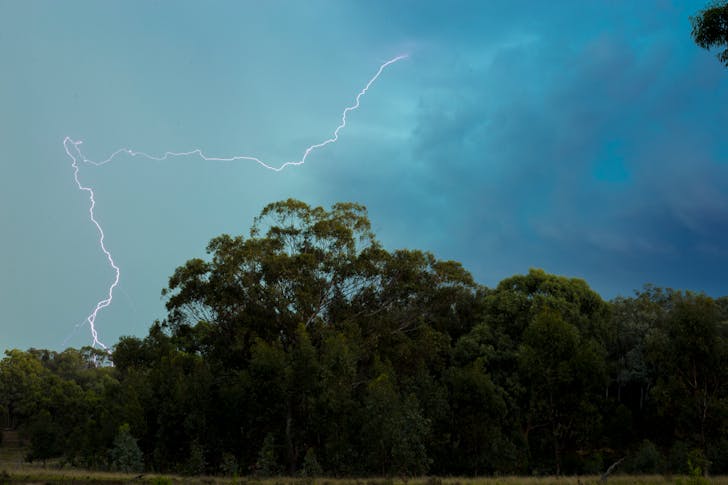
Shiv / Pexels / One of the most surprising parts of the research is how hard it is to track lightning damage. Many trees hit by lightning don’t die right away.
They can look fine for weeks or even months, then suddenly collapse. That makes it tough to count the real losses, which means forest managers and scientists may be missing the scale of the problem.
This kind of “silent death” can also mess up biodiversity. Animals and smaller plants that rely on certain trees suddenly find those trees gone. Whole food chains can be thrown off balance. And since lightning often hits the biggest, oldest trees, the damage hits forests right at the top.
Most climate models don’t account for lightning-driven tree death, a major blind spot. Forest planning and climate predictions need to factor in this growing threat. Krause and his team say it is time to take lightning seriously, not just as a fire-starter but as a forest killer in its own right.
More inLifestyle
-
`
 How a Texas Town Is Redefining Housing for the Vulnerable
A large housing initiative in Ferris, Texas, is drawing attention for its focused approach to homelessness in North Texas. Located about...
April 9, 2026 -
`
 How an Unfamiliar Mind Shapes Perception, Relationships, and Daily Life
Moments often pass without notice, leaving a quiet question behind: Where did the time go? The concept of a beginner’s mind...
April 3, 2026 -
`
 Why These Popular Colorado Food Spots Are Worth a Visit!
Colorado makes it easy to plan an entire day around food. The state serves bold flavors, strange themes, and dining rooms...
March 27, 2026 -
`
 Rockstar Billy Idol Is Opening Up About Fatal Overdose in New Documentary
Billy Idol built his legend on attitude, leather, and loud guitars. The pop icon, now 70, became one of the defining...
March 19, 2026 -
`
 Why Saranac Lake’s Iconic Ice Palace Was Canceled This Year
For more than a century, winter in Saranac Lake meant one thing above all else. The Ice Palace rose from the...
March 13, 2026 -
`
 How to Manage Overwhelming Emotions? A Step-by-Step Guide
When your feelings feel too big to handle, it can be scary and confusing. Intense waves of rage, panic, grief, or...
March 7, 2026 -
`
 5 Reasons Why Japan Is a Must-Visit Destination for Alaskans
For many Alaskans, Japan feels far away on the map. The flight is long, and the culture seems worlds apart. Yet...
February 26, 2026 -
`
 Ice-T Looks Back at His Towering Career & Explains the Term “OG.”
Ice-T never set out to become a legend. The iconic rapper, 67, just wanted to survive, speak his truth, and make...
February 21, 2026 -
`
 How to Create Your Own Community
Most people say they want community, but very few know how to create one. The idea of a village sounds warm...
February 14, 2026
More From MilitaryBud
-
 Wendy’s Worker Asked to Eat on a Stranger’s Porch – It Changed Both Their Lives
A Wendy’s worker needed somewhere quiet to eat lunch after a rough day. A Florida homeowner gave her permission to sit...
CommunityAugust 26, 2026 -
 2026 AM/NS India Times Critical Thinking Championship Aims to Equip 1 Million Students with Essential 21st-Century Skills
Knowing the right answer matters in school, but knowing how to reach that answer matters even more. The AM/NS India Times...
Open Your MindAugust 20, 2026 -
 Bethenny Frankel Turns Her Viral “Supermodel Snacks” Into a Real Cafe Experience
Bethenny Frankel is taking one of her biggest social media successes beyond the screen. The entrepreneur and television personality is opening...
Food AdventuresAugust 12, 2026 -
 How Celebrity Farms & Billionaires Turned the Cotswolds Into a Billion-dollar Lifestyle Brand
The Cotswolds used to be that quiet, scruffy place where farmers worked the land and city folks escaped for a peaceful...
LifestyleAugust 6, 2026 -
 Exclusive Startup Community is Replacing Burnout with Adventure and Cure for ‘Sunday Scaries’
For many entrepreneurs, Sunday evenings bring a familiar feeling of stress. The weekend ends, inboxes fill up, and another busy week...
CommunityJuly 28, 2026
You must be logged in to post a comment Login